
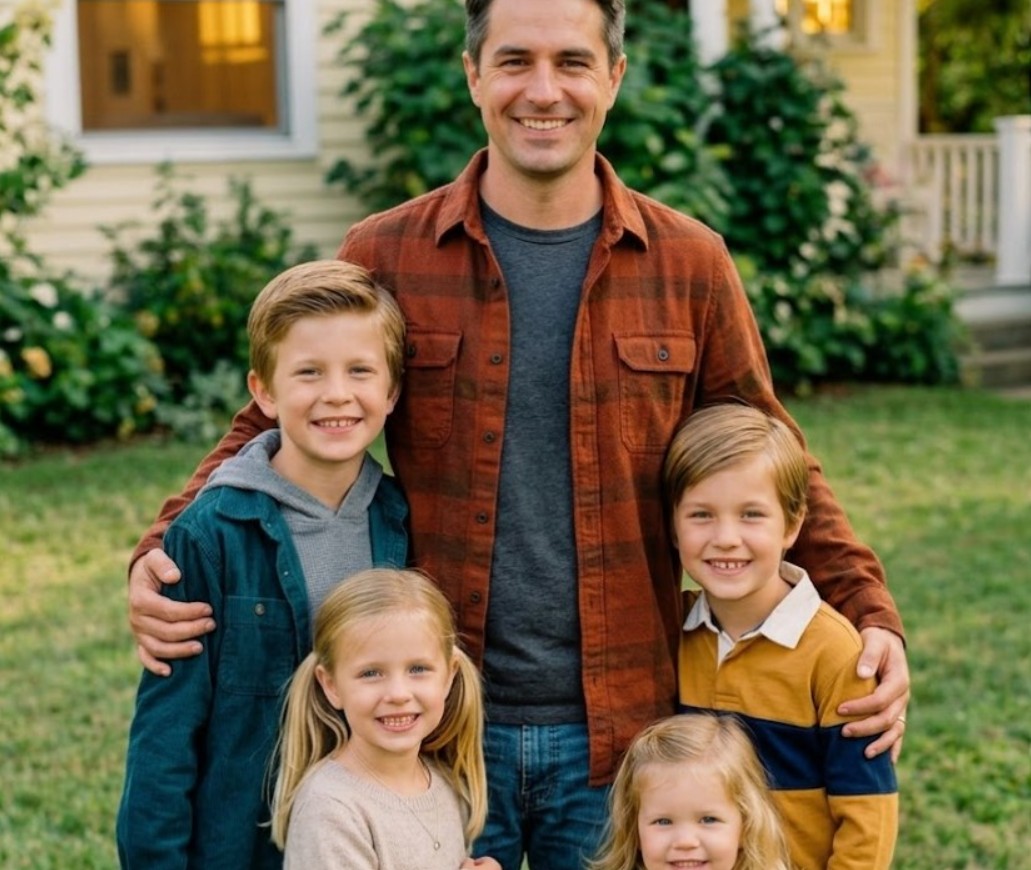
I was named the guardian of my fiancée’s four children after she disappeared — and years later, my eldest son looked me straight in the eyes and said:
“Dad… I can’t stay silent anymore. I know what really happened to Mom.”
For seven years, I lived believing the worst was behind us.
That pain had limits.
That loss was the hardest thing a family could go through.
I was wrong.
That day, at seven in the morning, I had already managed to burn breakfast, find a missing sneaker in the oven, break up an argument about who was “the most important” at the table, and convince the youngest to at least pretend to go to school willingly. I’m forty-four, raising four children who aren’t mine by blood — but have long been mine in life.
Their mother… was supposed to become my wife.
Kalla was the one who held everything together.
With a glance, she stopped conflicts. With a word — she reconciled. With a smile — she brought warmth back into the home.
Then she disappeared.
Her car was found near a bridge. The doors were open. Her bag on the seat. Her coat carefully placed on the railing.
Too carefully.
Back then, it seemed like a tragedy.
Now I understand — it was a plan.
That night, only one person was found — my eldest son, Marek. He was eleven. He stood barefoot by the roadside, trembling, unable to say a word. After a few weeks, when he finally spoke, he said only one thing:
“I don’t remember anything.”
And I believed him.
We all did.
With no body, no answers, no goodbye — we buried her after ten days. And I stayed. With four children looking at me as if I were all they had left.

People said I wouldn’t manage.
That love is one thing, but raising someone else’s children is another.
That I would break.
Maybe I did break.
But I didn’t leave.
I learned to braid hair, to calm nighttime fears, to read moods in silence. I became someone who stays, even when it’s hard. Not a replacement. Not a hero.
Just a man who didn’t betray them.
And then, after seven years, Marek told me he wanted to talk.
There was something different in his voice. Not childish. Not broken.
Determined.
Late that evening, when the house finally fell quiet, he sat across from me and stayed silent for a long time. Then he said:
— I remember.
Those two words changed everything.
He told me that night his mother didn’t disappear.
She left.
She drove to the bridge herself. Left the car. The bag. The coat. Everything — like in a bad movie where you immediately know: it’s staged.
She told him she had made too many mistakes. That she had debts. That there was someone who would help her start over.
Without us.
“They’ll be better off without me,” she said.
Then she made him promise not to tell anyone the truth.
To an eleven-year-old child.
He believed he was protecting his siblings. That if he spoke — he would destroy their lives.
So he stayed silent.
For seven years.
When he told me, I didn’t immediately understand what I felt.
Anger?
Pain?
Betrayal?
No. Something worse.
Emptiness.
But that wasn’t all.
Three weeks ago, she contacted him again.
He showed me a box hidden in the closet. Inside — a photo. Her. Older. Thinner. Next to her, an unknown man.
And a note.
She wrote that she was ill. That she wanted to explain everything. That she “couldn’t leave without fixing the past.”
The next day, I went to see a lawyer.
I was no longer just someone doing his best.
I was their protection.
We filed an official notice: no contact with the children — only through legal channels. No messages. No pressure. No secrets.
A few days later, I met her.
A parking lot near a church. Empty. Cold.
She got out of the car, and for a moment, she felt like a stranger.
But not enough to forget.
She spoke about fear. About debts. About believing I would manage.
That the children would be better off without her.
I listened.
Then I said:
— You don’t get to call running away a sacrifice.
She went silent.
— You didn’t just leave. You made a child carry your lie.
When I asked why she wrote to Marek, she answered quietly:
— Because I knew he would respond.
And in that moment, everything became clear.
She had chosen the most vulnerable again — because it was easier.
When I returned home, I sat next to Marek.
— You don’t owe anyone anything anymore — I told him.

Then I gathered all the children.
I didn’t lie. But I didn’t break them either.
I told them their mother once made a decision that caused pain. That adults can make mistakes. That they can leave. That they can be selfish.
But that never — never — is it a child’s fault.
I told them the truth about Marek. And I added:
— He was a child who was asked to keep a secret. And he did everything to protect you.
No one turned away from him.
On the contrary.
They came closer. They hugged him.
No words — but everything was understood.
Family isn’t always those who stay.
It’s those who find their way back to each other — even after the truth.
Later, Marek asked:
— And if she comes back… and wants to be our mom again?
I didn’t search for words.
— She gave you life — I said. —
But I was the one who was there while you learned how to live.
And that… is not the same.


